Showing posts with label 茶. Show all posts

Wednesday, August 20, 2014

Xue Hao Snow Tips Yellow Tea • 雪毫黃茶

Photo & Video Sharing by SmugMug
Browsing The Chinese Tea Shop for something new, I was intrigued by Xue Hao Snow Tips Yellow Tea. I'd not come across Chinese yellow tea before and was curious how it compared with Korean yellow tea.

When the parcel arrived, it was the first one I opened. The first thing that was obvious was that it was not going to be anything like Korean yellow tea, at all... The leaves were tiny, coiled, and full of fine white hairs. It looked nearly identical to Bi Lo Chun, except for a lighter, slightly yellow colour.

From what I gathered, it's harvested and produced in much the same way, as well, using only the tiniest buds of early spring. The one element of difference between yellow and green tea is that after they are withered and quickly heated to stop the enzymes from further changing the leaves, the process known as "kill-green", yellow tea is gently wrapped in cloth and left to sit in its own warmth, drawing more aroma and flavour from the leaves and giving them their yellowish tint.

I always love the thrill of opening an unknown tea and getting the first, fresh scent of the leaves. This one was very interesting, fresh, sharp, with a distinct lemon zest and cocoa aroma.

Deciding it best to treat it as a green tea, I gave it a slightly longer infusion with not too hot water. The result was a pale, yet bright yellow brew, speckled with tea down. The taste was very clear and refreshing. Not surprisingly, it tasted much like a fine Bi Lo Chun, with a distinct nutty bitterness, but the lemon-cocoa aroma of the leaves came through very nicely to give it a unique complexity that, in my opinion, made it slightly more enticing.

The ultra fine quality of the buds required to make yellow tea results in a very small harvest each year, making this a rather difficult tea to find. It seems I may have got a hold of the last bit from The Chinese Tea Shop, as the site was sold out when I returned to read more about it. But, if you ever come across any, I highly recommend it. (Or, if you happen to be in Korea in the next little bit, come over and I'll share a pot with you! I just can't guarantee I'll be keeping it for long. ;) )


Photo & Video Sharing by SmugMug

Photo & Video Sharing by SmugMug

Photo & Video Sharing by SmugMug

Photo & Video Sharing by SmugMug

Friday, April 4, 2014

Rou Gui Cha (premium) • 肉桂茶

Photo & Video Sharing by SmugMug

After first sampling Rou Gui cha at Kkik Da Geo, I was so taken by it that I dreamed that I'd returned to the tea shop with a giant tortuous and loaded its back with as much Rou Gui cha as it could carry (it had a traditional Korean "jigae", an wooden A-frame usually used for carrying wood on your back, customized to fit its shell), then slowly lead it out the door.
Photo & Video Sharing by SmugMug

Repeating the dream to Prof Ahn, he laughed, then told me that the one I'd tried was medium quality and they'd just received a shipment of top grade Rou Gui cha. If the medium grade Rou Gui was already one of the most expensive teas I'd ever bought ($1.50/g), I figured there would be no way I'd be able to buy the premium one, but to my delight they were packaged in 7 gram portions. It still works out to $2/g, but $14 didn't hurt.

I was very curious how much of a difference there could be between the two grades. The medium grade was already one of the best teas I'd ever had. As I mentioned previously, rou gui is the Chinese word for dried cinnamon bark, and the tea is named after it because the aroma and tingling sensation in your mouth and throat are so similar and the medium grade leaves had this exact sensation.

Intending to make this small sample last as long as possible, I prepared my 25ml Biao Zhun pot that I usually only use for Da Hong Pao. While the pot heated, I admired the leaves. The first thing I noticed is that they were much lighter, with several green and rusty-brown leaves. They reminded me a bit of Phoenix dancong leaves. Transferring them into the warm pot, a beautiful herbal and flower aroma arose which only intensified with a quick rinse. Carefully steeping the leaves for 15 seconds, I took a long whiff of the tea. Already, my mind was blown. A small sip and it instantly knocked all other teas from my mind. There was no other I've had that could compare on any level. I could divide its characteristics into different categories and make isolated comparisons to other teas, but as a whole it stands alone in my experience. The rich, bold sweetness and floral, perfumy bitterness wove themselves together into a seductive, realm-melting spell. It is by far the most amazing tea experience I've ever had.

From what I can tell, the medium grade Rou Gui was produced using the traditional method of a medium oxidization and a heavy roast, whereas these leaves where produced using a newer method of high oxidization and a lighter roast, bring out the spectacular floral aroma.

Photo & Video Sharing by SmugMug

Photo & Video Sharing by SmugMug


Photo & Video Sharing by SmugMug

Photo & Video Sharing by SmugMug


Photo & Video Sharing by SmugMug

Photo & Video Sharing by SmugMug

Photo & Video Sharing by SmugMug

Photo & Video Sharing by SmugMug

Saturday, December 21, 2013

Taiping Houkui • 太平猴魁

Photo & Video Sharing by SmugMug
2009 Taiping Houkui • 2009 太平猴魁

A few weeks ago, I posted about comparing Taiping Houkui at Kkik Da Geo and thought I'd do a follow up.

The comparison was between an authentic 2009 and an imitation from earlier this year. Though the imitation was still nice, it's hard to choose against authentic, and I brought 50g of it home.

Though I fully accept that this blog may put me in the upper echelons of tea snobbery, I'm normally a rather humble guy... To prove it (is trying to prove humility still humble? oops!), I'm not above using a $4 mason jar instead of a fancy $25 French press for steeping! (-_^). It is an Italian mason jar, so I guess it's still a snob-level mason jar... Anyway, I punched a few holes in the lid to pour from and gave it a try.

It wasn't totally ideal, it was tricking to pour (I hadn't considered the heat of the glass) and a little too big, but after a couple of adjustments, it did the trick. Some green teas can stand a little hotter water, this is not one of them. Also, the width of the jar was much wider than the the proper glass vessel, making the amount of leaves to use harder to judge.

I also tried using a "new zhuni" Draon Egg potthat I keep for white and green teas. I thought it's height would be enough but it was still too short to hold the extremely long Taiping Houkui leaves. But after just a few seconds in water, they softened enough to slip into the pot, like pasta in boiling water. The results of the zhuni pot were excellent, the only drawback being that you miss the "phoenix dance" as the leaves swirl around the pot.

Overall, I found this tea to be unforgiving. If the water was even slightly too hot, the taste was unpleasant and other times I wasn't able to get much flavour from it at all. Once I become better acquainted with its mood, I should find more consistency. Though it's challenging bothDragon Well and Bi Lo Chun for top green tea, I think that I still prefer Dragon Well.

What drew me the most to Taiping Houkui are its unique, long leaves. The cultivar used for Taiping Houkui, Shi Da Cha, is exclusively used for this tea, it isn't found in any other tea growing region, and is the reason for its sharp, blade-like shape. Buds with five leaves are initially plucked, then during the processing the bottom two leaves are removed. Most green teas are roasted and rolled but these leaves ate flattened with mesh and baked, leaving their original appearance somewhat intact.

Photo & Video Sharing by SmugMug

Photo & Video Sharing by SmugMug

Photo & Video Sharing by SmugMug

Photo & Video Sharing by SmugMug

Photo & Video Sharing by SmugMug

Photo & Video Sharing by SmugMug


Photo & Video Sharing by SmugMug

Photo & Video Sharing by SmugMug

Photo & Video Sharing by SmugMug

Photo & Video Sharing by SmugMug

Photo & Video Sharing by SmugMug

Photo & Video Sharing by SmugMug

Tuesday, October 1, 2013

Dong Feng Mi Ren (Oriental Beauty) • 東方美人

Photo & Video Sharing by SmugMug
Dong Feng Mi Ren (Oriental Beauty) • 東方美人
also commonly named Bai Hao Cha (White Hair Tea) • 白毫茶

Of all the teas I've explored, Oriental Beauty is among the most intriguing, most unique, and all-around most wonderful. Its story is one of serendipity, stubborn determination, and a tiny green cricket.

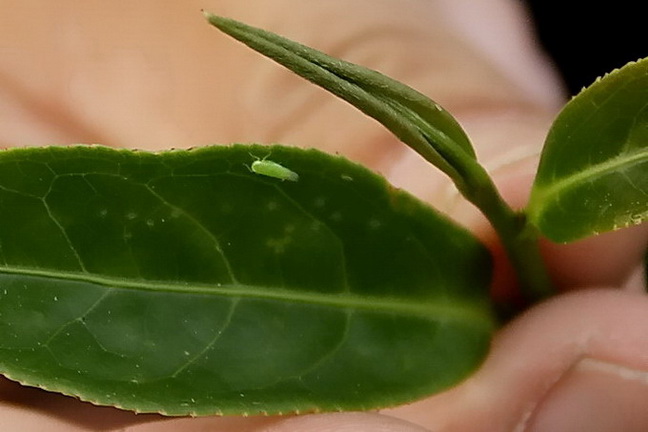
It all started in Taiwan during the late 1800's with tea farmers who'd recently immigrated from China, bringing tea plants with them. During the early months of summer, when temperatures began to soar, many of the new tea gardens would be ravaged by swarms of tea jassids, a tiny cricket-like creature that sought shelter from the heat in the shade of the dense tea bushes, feeding on the young leaves and buds.

The early tea Taiwanese farmers received prices based on the quality of their tea from the merchants, among them John Dodd, a Scottish merchant who was a central figure in exporting Taiwanese tea to the West. They didn't even bother harvesting leaves from the crops that had been desecrated by the tea jassids, since they figured they would most likely be unable to even sell it at all. Then, one unorthodox farmer, determined to salvage something of his summer crop, harvested his fly-bitten leaves and set off to present his tea to John Dodd. When he returned, his neighbours couldn't believe the price he bragged to have claimed for his tea but he wasn't lying.

It wasn't long before it was in high demand in the west and it is said that when Queen Victoria was presented with it, she was so enchanted with its beauty that she, herself, dubbed it Oriental Beauty. Others dispute this, saying that Oriental Beauty was in fact created in 1920, after the time of Queen Victoria and that it was actually Queen Elizabeth II who named it in the 1960's. It's likely legend that any queen named the tea at all, but according to sources that I trust, it did originate before the turn of the 20th Century. As far as its name, maybe someone should ask Queen Elizabeth II before it's too late!

In response to the tea jassid's bite, the leaves produce an antibody that in turn imparts an incredibly sweet fragrance and flavour to the tea. The insects also prompts the oxidation process and when the entire process is finished the leaves are left with a beautiful range of rich tones; white, green, orange, burgundy, and dark brown.

I was taught to steep Oriental Beauty at a very low temperature, only 70°C (158°F). It doesn't require a huge amount of leaves either, about a third of the pot is enough. Though I usually stick with Yixing pots, I sometimes use ceramic for Oriental Beauty, since it delivers the full flavor of this tea. There's no need for the porousness of Yixing clay to take away anything. For this post, I couldn't help but use a Xishi pot, designed, in a sense, after the legendary "most beautiful girl in China" but more on that in another post...

Oriental Beauty is potent enough to deliver an exceptional taste with a relatively small amount of leaf. It's a deeply oxidized tea, about 70%, medium roasted, and made entirely of buds and small leaves. A high-quality Oriental Beauty has a warm, honey fragrance and even a rose water quality I haven't encountered in any other tea. When brewed strongly, it can release a nearly red color, but a light golden brew seems to express this tea's best qualities.

Examining the finished leaves, you can find leaves with little dark specks on them, where the tea jassid fed. The bitten leaves turn a more yellowish tint (on the bush) and become misshapen and slightly crumpled. A high concentration of spotted leaves means a very high quality tea. The leaves should be small, as well. The more tips and small leaves, the better.

Of course, there are many imitations now, even coming from mainland China. It doesn't mean they're all bad but the best Oriental Beauty still comes from the town of its origin, in Hsinchu County.

Photo & Video Sharing by SmugMug


Photo & Video Sharing by SmugMug

Photo & Video Sharing by SmugMug

Photo & Video Sharing by SmugMug

Photo & Video Sharing by SmugMug


Photo & Video Sharing by SmugMug